High-Performance Rubber Bushings & Chassis Damping Components
OE-specification bonded rubber-to-metal bushings, heavy-duty suspension pivots, and engine isolation mountings manufactured with precision vulcanization techniques.
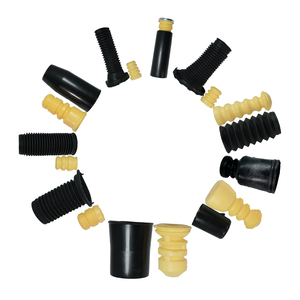
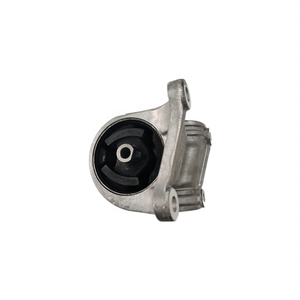
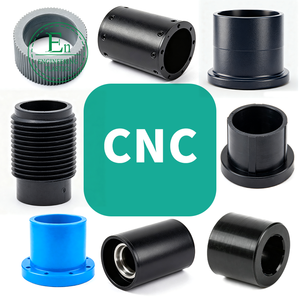
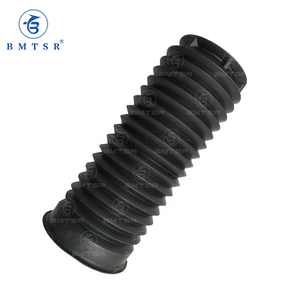
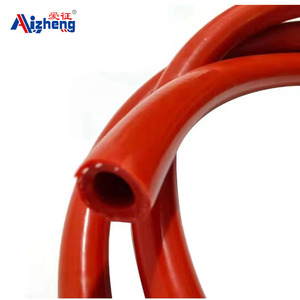
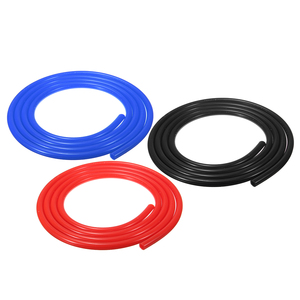
Universal Heat Resistant Silicone Radiator Vacuum Hose Intercooler
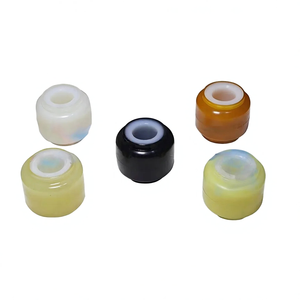
Polyurethane Trailer Bush Cab Front Suspension Rubber Bushing HOWO
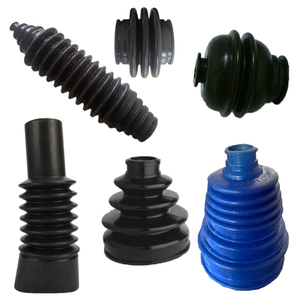
Elastomeric Mechanics & Tribological Principles in Automotive Suspension Bushings
Automotive suspension bushings represent the critical, highly stressed compliant link between dynamic wheel assemblies and rigid vehicle subframes. Serving simultaneously as rotational pivot points, vibrational isolators, and acoustic attenuation barriers, these multi-axial components must deliver exact kinematic control while isolating passengers and cargo from severe noise, vibration, and harshness (NVH).
Core Physical Dynamic: The operational lifespan and ride tuning of an automotive suspension bushing are governed by the dynamic loss factor ($\tan \delta$) and the ratio of static-to-dynamic stiffness ($K_{\text{dyn}} / K_{\text{stat}}$). As an industry-leading China manufacturer, our vulcanized compounds are formulated to maintain predictable hysteresis loops across operational temperatures spanning −40°C to +120°C, suppressing cabin resonance while eliminating micro-cracking and elastomeric creep under sustained high-tonnage cyclic loads.
Radial & Axial Load Control
Engineered inner and outer metal sleeves (cold-drawn seamless steel ASTM 1020) bonded via Chemlok® adhesive systems ensure zero interfacial slippage, handling radial impact loads exceeding 45 kN while preserving predictable angular deflection without debonding.
Torsional Elasticity & Articulation
Suspension arms, balance rods, and trailing links require high torsional compliance without progressive wind-up hardening. Our compounding allows elastic deflection up to ±35° torsional sweep, preventing premature shear failure during rough off-highway haulage.
NVH Damping Spectrum
Natural Rubber (NR) and synthesized EPDM matrix polymers engineered with tailored carbon black particulate dispersion dampen high-frequency structural acoustic transfers (100 Hz–1.5 kHz) generated by road surface asperities and braking torque reactions.
Elastomeric Compound Matrix: Comparative Performance Standards
Engineering data compiled from internal laboratory rheometer curves, DIN abrasion assays, and multi-axis servohydraulic durability testing.
| Polymer Base Material | Shore A Hardness | Tensile Strength (MPa) | Fatigue Life (>10 Hz) | Oil / Ozone Resistance | Ideal Application Domain |
|---|---|---|---|---|---|
| Natural Rubber (NR / Polyisoprene) | 55 – 75 ± 5 | ≥ 22.5 MPa | > 2.0 × 10⁶ Cycles | Moderate / High (Treated) | Passenger Car Control Arms, Subframe Bushings, Engine Mounts |
| EPDM (Terpolymer) | 60 – 80 ± 5 | ≥ 14.0 MPa | > 1.2 × 10⁶ Cycles | Superior Ozone / Thermal | Radiator Mounts, Stabilizer Bar Liners, Cabin Leaf Bushings |
| Cast Polyurethane (PU / MDI) | 75 – 95 ± 3 | ≥ 38.0 MPa | > 2.5 × 10⁶ Cycles | Immune to Oil & Slurry | Heavy Commercial Fifth Wheel, Trailer Trunnion, HOWO Cab Flips |
| Nitrile Butadiene (NBR) | 65 – 80 ± 5 | ≥ 16.5 MPa | > 1.0 × 10⁶ Cycles | Exceptional Hydrocarbon | Transmission Case Pivots, Gear Linkages, Sump-Adjacent Mounts |
Why Tier-1 Importers Choose Our Chinese Manufacturing Facilities
Combining four decades of specialized rubber compounding heritage with cutting-edge German DESMA injection molding presses and complete in-house tooling validation.
Automated Silane Phosphatizing
Every inner core and outer metal casing undergoes full automated multi-tank ultrasonic degreasing, zinc phosphatizing, and precision two-coat Chemlok adhesive dipping to achieve 100% rubber-tearing cohesive failure rather than adhesive boundary detachment.
High-Precision Mold Tooling
With an in-house CNC tool & die workshop housing Makino high-speed machining centers, custom CAD/CAM tooling is engineered within 14–21 days directly from OEM samples, blueprints, or CMM reverse-engineering point clouds.
100% Batch Traceability (IATF 16949)
From computerized raw rubber mastication to moving-die rheometer (MDR) vulcanization tracking and dynamic stiffness characterization benches, every production batch is linked to verifiable dimensional, durometer, and tensile test certificates.
Global Heavy Fleet Coverage
Extensive catalog coverage spanning Sinotruk HOWO, Shacman, FAW, Tata Motors, Ashok Leyland, Mercedes-Benz Actros/W204, Scania, Volvo, and specialized North American trailer suspension architectures (Hendrickson, York, BPW).
Flexible OEM / Private Label
Comprehensive custom private-branding services including laser-etched OEM part numbering, proprietary anti-counterfeit packaging, bulk container barcoding, and tailored export palletizing protecting steel from maritime humidity.
Rapid Dispatch & Safety Stock
Continuous warehouse buffer programs for top-moving reference numbers (center bearing assemblies, cab mounts, torque rod bushings) enabling container consolidation and sea-freight dispatch in under 7 business days.
Future Sourcing & Procurement Trends in Chassis Bushing Supply Chains
As international supply chains face geopolitical realignments, currency volatility, and carbon-footprint auditing, procurement directors for major fleet distributors and Tier-1 assemblers must adapt their purchasing strategies. Here are the core procurement shifts shaping 2026–2030:
1. Total Cost of Ownership (TCO) Supersedes Initial Piece Price
Historically, aftermarket purchasing focused heavily on rock-bottom unit pricing, often leading to catastrophic fleet failures caused by inferior uncured reclaim rubber or un-phosphated metal sleeves that de-bonded within 25,000 km. Today, leading global buyers prioritize Life-Cycle Operating Cost.
By deploying high-density natural rubber and polyurethanes with guaranteed fatigue lifespans of >1.5 million load cycles, fleets reduce vehicle downtime, warranty claims, and unscheduled workshop labor by up to 42%, yielding massive net savings across 100,000 km intervals.
Key Procurement Metric Shifts
- Bonding Integrity Verification: Rejection of mechanical friction fits in favor of verified 100% vulcanized Chemlok adhesion.
- Direct-from-Source China Consolidation: Disintermediating local regional trading houses by pairing directly with Chinese core manufacturers.
- Pre-Shipment Digital Rheometer Reports: Demanding batch-specific delta curves for vulcanization cure times and vulcanized modulus.
Electrification (EV) Impact on Suspension Stresses
- +25% to +35% Gross Curb Weight: Heavy lithium battery packs impose sustained static compressive loads on suspension pivots.
- Instantaneous Peak Electric Torque: Extreme rotational shearing forces applied to rear control arm bushings during acceleration.
- Zero Combustion Masking Noise: Cabins are virtually silent; any chassis squeak, bushing knock, or elastomeric friction is immediately audible to vehicle operators.
2. EV Commercial Trucks Demand Higher Acoustic Purity
The transition toward commercial battery-electric (BEV) and hybrid haulers has fundamentally redefined suspension engineering tolerances. Because electric powertrains produce virtually zero engine noise, traditional hydraulic rumble or suspension rattle that was previously masked by diesel combustion is now an intolerable source of driver fatigue.
Consequently, procurement specifications now mandate specialized ultra-low-durometer compliance paths combined with high progressive damping stops, preventing bottoming-out while eliminating stick-slip friction noises through internal PTFE lubricating coatings.
Next-Generation Technology Trends in Suspension Bushing Design
The suspension bushing of tomorrow is no longer a simple static lump of rubber molded around a metal tube. Driven by weight reduction mandates and high-fidelity vehicle dynamics modeling, major engineering advancements are transforming the production floor:
Hydraulic Fluid-Filled Bushings (Hydro-Bushes)
Integrating micro-orifices, fluid chambers, and glycol damping fluid directly within the vulcanized rubber core. This achieves dual-rate damping: compliant low-stiffness damping during small amplitude highway cruising, and aggressive hydraulic restriction under sudden braking or pothole impacts.
Composite & Aluminum Sleeves
Replacing traditional heavy carbon-steel outer shells with high-strength glass-fiber reinforced polyamides (PA66-GF50) and aerospace-grade extruded 6061-T6 aluminum alloys. This delivers a 40% reduction in unsprung mass, directly improving wheel tracking responsiveness and vehicle fuel efficiency.
Bio-Based & Recycled Elastomers
In response to stringent European Scope 3 emissions reporting, forward-thinking Chinese rubber chemical engineers are integrating devulcanized reclaimed rubber crumb and sustainable bio-silica derived from rice husk ash into secondary filler networks, reducing the carbon footprint by 28% without sacrificing tensile strength.
Frequently Asked Questions: Technical Sourcing & Procurement
Essential engineering and commercial considerations when importing automotive rubber suspension bushings from China.
How do you guarantee that rubber-to-metal bonding will not fail under severe cyclic loads?
Bonding integrity is guaranteed by our automated 7-stage pre-treatment line. Metal sleeves are degreased, shot-blasted to Ra 3.2 μm surface roughness, and treated with a two-coat Chemlok or Megum thermal bonding adhesive. During tensile destruction QC tests, failure must occur purely within the elastomeric matrix (100% rubber cohesive failure), with zero metal adhesive peel allowed.
Can you cross-reference obscure OEM, OES, or European/Indian aftermarket part numbers?
Yes. Our internal cross-reference database spans over 30,000 interchange numbers including Tata (407, 709, 1613, Signa, Prima), Ashok Leyland, Mercedes-Benz, Sinotruk HOWO, Hendrickson, and Lemförder cross-codes. Provide your OE number, laser markings, or physical dimensions (Bore × Outer Diameter × Inner Sleeve Length), and our technical sales team will match the exact tooling.
What is the typical lead time for custom tooling development for discontinued or new vehicle platforms?
For custom bushing geometries, mold design and CNC tooling are completed within 15 to 20 business days. First Article Inspection (FAI) sample parts including CMM dimensional reports and dynamic stiffness test data are couriered to your office via DHL/FedEx for physical bench and vehicle fitment clearance before full mass production begins.
How are rubber parts protected against oxidation, ozone attack, and maritime rust during long sea transit?
All raw rubber formulations incorporate high-grade microcrystalline waxes and chemical antiozonants (such as 6PPD) that bloom to the surface, creating an active barrier against ozone degradation. Metal sleeves are electro-galvanized or black-e-coated (exceeding 240 hours neutral salt spray testing) and packed in vacuum-sealed VCI anti-corrosion barrier bags within heavy export cartons.
When should a buyer select Polyurethane (PU) over Natural Rubber (NR) for suspension pivot bushings?
Polyurethane should be selected for high-wear, severe-duty applications where maximum abrasion resistance and chemical immunity (diesel, grease, road salts) are paramount, such as heavy-duty trailer trunnions, fifth-wheel couplers, and mining dump truck suspensions. Natural Rubber is superior for passenger vehicles and light cabs where high-frequency vibration isolation, acoustic quietness, and torsional suppleness are the primary objectives.
What are your standard Minimum Order Quantities (MOQ) and container consolidation capabilities?
For existing tooling catalog parts, our standard production MOQ is typically 300 to 500 units per item. For mixed container orders, we provide consolidated shipping solutions allowing clients to combine suspension bushings, engine mountings, radiator hoses, and center support bearing assemblies into unified 20GP or 40HQ container loads with zero pallet mixing fees.
Connect with China's Premier Rubber Suspension Bushing Engineering Team
Submit your OEM part numbers, technical drawings, or physical sample requirements. Our application engineering team will provide comprehensive dimensional verification, compound recommendations, and direct factory pricing within 24 hours.
Inquire Now