Featured OEM/ODM Production Assemblies & Bushings
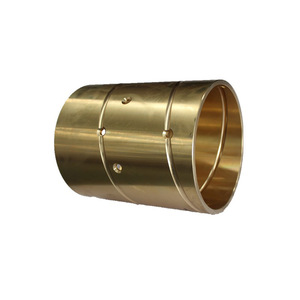
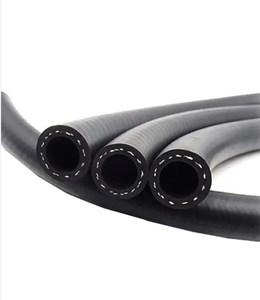
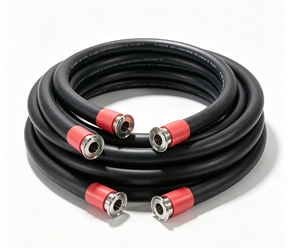
Explore our precision-molded mechanical rubber components, gear shift boots, control bushings, and industrial fluid transfer lines manufactured for harsh automotive duty cycles.
Engineering Principles of Heavy-Duty Gear Shift Boots
Comprehensive technical breakdown on elastomer compounding, NVH isolation, dynamic cyclic fatigue resistance, and environmental ingress protection.
In modern commercial vehicles, utility tractors, and passenger automobiles, the gear shift boot (transmission shifter gaiter) serves as a critical barrier between the active undercarriage environment and the cabin interior. Far from being a mere aesthetic trimming component, an industrial-grade shift boot is an engineered elastomeric bellow designed to execute four simultaneous mechanical functions: kinetic compliance across multi-axis shift throws, acoustic dampening (NVH containment), thermal deflection from gearbox exhaust radiation, and hermetic sealing against liquid and particulate contamination.
During gear engagement cycles, transmission linkage geometries generate non-linear angular displacement. When heavy-duty commercial vehicles like Tata, Ashok Leyland, or utility platforms operate on high-vibration terrains, dynamic oscillations are directly transmitted up the shift lever. If the boot compound lacks resilient viscoelastic properties, mechanical fatigue induces micro-cracking across convolute roots within 10,000 duty cycles. At Amit Rubber Products, our OEM/ODM gear shift boot manufacturing relies on precision mold tooling that balances wall thickness uniformity with high-recovery elastomeric compounds, preventing wall binding, ballooning, and mechanical shearing under heavy torque deflection.
Environmental & Hydrocarbon Resistance
Formulated with vulcanized EPDM, chloroprene (CR), or customized Nitrile (NBR) blends to resist synthetic gear lubricants, grease spatter, ozone aging, and battery vapors without material swelling or embrittlement.
Multi-Axis Convolute Geometry
CAD-optimized bellows allow seamless shifting clearance across extreme shift stroke ratios (1st through Reverse gears) without localized stress concentrations or mechanical pinch-off under cold weather conditions.
Acoustic Transmission Isolation
Integrated dual-wall construction and high Shore A damping matrices suppress powertrain hum, gearbox gear rattle, and chassis harmonic noise from penetrating the vehicle operator cab.
Elastomer Compound Selection Matrix for Shifter Boots
Evaluating mechanical trade-offs between vulcanized rubber compounds, thermoplastic elastomers, and heavy-duty synthetic rexine materials.
| Polymer Class | Operating Temperature | Oil & Fuel Resistance | Dynamic Flex Life | Acoustic Damping (NVH) | Primary Industrial Use-Case |
|---|---|---|---|---|---|
| EPDM (High-Grade) | -45°C to +135°C | Moderate (Splash-proof) | Superior (>500k cycles) | High | Heavy Commercial Vehicles, Long-Haul Truck Cabs, Agricultural Tractors |
| NBR (Nitrile Blend) | -30°C to +110°C | Maximum (Immersion Safe) | Good | Moderate | Under-Chassis Transmission Links, Oil-Exposed Off-Road Enclosures |
| Polyurethane (PU) | -35°C to +95°C | Excellent | Exceptional Cut/Tear | High Structural Rigidity | Heavy Mining Equipment, Severe Shock Articulation Bushings & Boots |
| Silicone Elastomer | -60°C to +200°C | Low-Moderate | Very High | Moderate | Extreme High-Temp Turbochargers, High-Output Powertrain Bellows |
| Reinforced Rexine / PVC | -20°C to +85°C | Good | Aesthetic Flex | Low-Medium | Cabin-Interior Secondary Trims, Zip-Type Retrofit Gaiters (Tata/Leyland) |
Future Procurement Trends in Automotive Gaiters & Rubber Components
Strategic analysis for procurement managers navigating electrified drivelines, material harmonization, and automated supply chain tracking.
Procurement departments across Tier-1 auto manufacturers and aftermarket replacement networks face radical changes driven by automotive powertrain transitions and stricter international environmental standards:
Shift Toward TPE/TPV Material Harmonization
Global fleets and OEMs are shifting procurement preferences from sulfur-cured elastomers toward recyclable Thermoplastic Elastomers (TPE/TPV). TPV shift boots offer 20-30% weight reductions, rapid cycle injection molding, and simplified end-of-life vehicle recyclability aligned with EU ELV directives.
Integrated Secondary NVH Barriers
With electric vehicle (EV) commercial conversions and ultra-quiet Euro-6 / BS-VI diesel platforms, cabin acoustic insulation has become paramount. Procurement teams now require gear boots engineered with secondary integrated foam cushions and snap-in acoustic floor rings to eliminate pass-through transmission resonance.
On-Demand Tooling & Rapid Reverse Prototyping
Shortened model life-cycles mandate faster time-to-market. Industrial buyers increasingly favor manufacturers capable of 3D optical scanning, FEA mold flow analysis, and rapid tooling verification, dropping tool-to-sample cycles from 60 days down to under 15 days.
Why Global Distributors Rely on Our Production Plant
Amit Rubber Products brings 46+ years of specialized tooling and compounding discipline from Kashmere Gate, New Delhi's epicenter of commercial vehicle parts.
In-House Custom Tooling & Mold Shop
We engineer precision progressive cavity molds and multi-core transfer tooling directly to OE drawings or customer physical samples, accommodating custom bracket rings and complex bellow geometry.
Rigorous Polymer Formulation Control
Our raw compound batches undergo continuous rheometer curing testing, tensile and elongation evaluation, and Durometer hardness verification to ensure non-cracking performance from -40°C to +125°C.
Complete Platform Coverage
Production catalogs span major commercial platforms: Tata (407, 709, 1613, 2515, Signa, Prima), Ashok Leyland (U-Truck, BS3/BS4/BS6), Mahindra Bolero, Marcopolo buses, combine harvesters, and industrial trailers.
Zero-Backlog Inventory & Express Dispatch
Large-scale warehouse facilities maintain buffer inventories across high-frequency reference codes (88509, 2518/6013, 4018, Leyland 4-hole), guaranteeing swift container loading and parcel freight dispatch.
End-to-End OEM/ODM Flexibility
From custom branding, laser marking, and specialized poly-bag barcoding to customized durometer hardness (50 Shore A to 90 Shore A), we scale to match specific client purchasing roadmaps.
Experienced Engineering Leadership
Supervised directly by Mr. Amit Chitkara, our technical sales engineers provide verified cross-referencing, avoiding misfits and expensive port-of-entry shipment rejections.
Gear Shift Boot & Rubber Bushing Procurement FAQs
Direct technical answers addressing lead times, dimensional verification, compound selection, and sample reproduction.
Q1: What exact technical specifications are needed to replicate a gear shift boot?
To produce an exact OE-matched replica or custom shift boot, supply the top lever bore diameter, base mounting plate profile (or bolt-hole pitch configuration), maximum height during full gear throw, and working environment conditions (oil exposure, ambient heat). Physical samples or step 3D CAD files allow fastest tool production.
Q2: How do you prevent gear boots from tearing along bellows during cold winter usage?
Cold-weather embrittlement occurs when standard commercial rubber reaches its glass transition temperature (Tg). We formulate low-temperature plasticized EPDM and silicone blends that retain elastomeric flexibility down to -40°C, combined with controlled root radiuses that eradicate mechanical stress focus points.
Q3: What are the typical Minimum Order Quantities (MOQ) for custom OEM/ODM tooling?
For catalog standard boots (such as Leyland 4-hole, Signa BS6 heavy duty, or 4018 EX zip boots), orders start from standard master carton counts (typically 100-200 pieces). For custom-tooled bespoke geometry, initial tooling qualification runs begin around 500 units, scaling into multi-thousand unit recurring batches.
Q4: Can you integrate metal retaining plates or zip-closures directly into gaiter boots?
Yes. We offer composite shift boot production featuring vulcanized rubber-to-metal bonded base flanges, reinforced nylon quick-snap locking rings, and heavy-duty stitched rexine covers fitted with industrial zips designed for rapid maintenance retrofits without removing gear knobs.
Q5: What inspection protocols ensure batch-to-batch dimensional consistency?
Every production lot undergoes dimensional coordinate measuring, wall-thickness micrometer screening across inner convolutions, shore durometer hardness verification, and cyclic flexure testing. Parts are thoroughly checked prior to carton packaging to eliminate out-of-round seals or deformed lip profiles.
Q6: What delivery terms are offered for overseas international distributors?
We routinely support EXW, FOB (Mundra / Nhava Sheva / Delhi ICD), CIF, and express air freight terms. All sea-freight consignments are packed with moisture-resistant barriers and palletized shrink-wrapping to preserve rubber mechanical stability across ocean transit cycles.