OEM-Matched Air Intake Hoses & Boost Induction Assemblies
Engineered to resist vacuum collapse, withstand high under-hood heat cycles, and dampen severe engine torsional vibration.
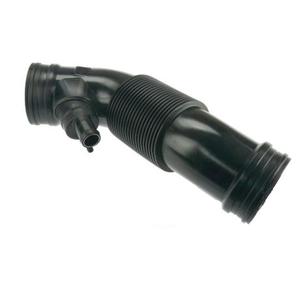
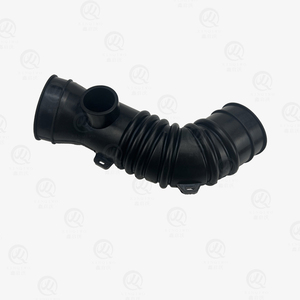
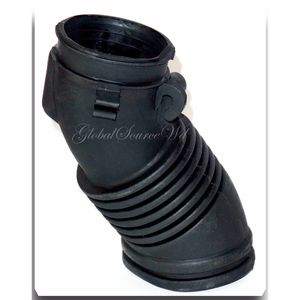
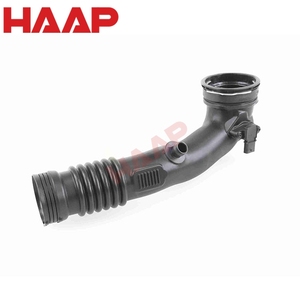
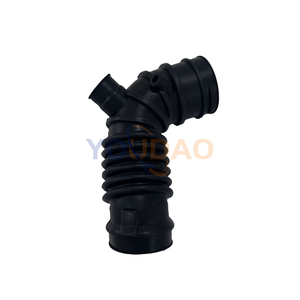
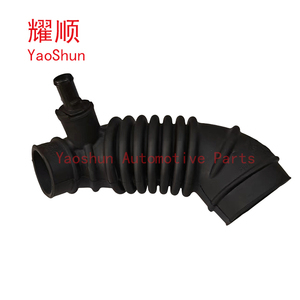
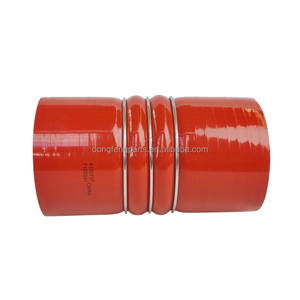
Structural Anatomy: Preventing Vacuum Collapse & Thermal Degradation
The modern combustion and forced-induction air intake tract operates under severe physical demands. Unlike coolant pipes that handle outward hydrostatic pressure, air intake hoses must resist sudden negative pressure spikes (vacuum loads) during wide-open throttle transitions, while isolating engine vibration from chassis-mounted intercoolers and mass air flow (MAF) sensors.
- Convoluted Ribbed Geometry: Strategically moulded pleats provide superior axial and angular deflection, neutralizing engine rocking without stressing sensor flanges or causing joint leakages.
- Multi-Layer Textile Reinforcement: High-tenacity knitted polyester or aramid yarn layers are vulcanized between rubber plies, preventing dynamic radial collapse when air filters reach high restriction levels.
- Compound Compatibility: Internal fluorocarbon (FKM) or specialty nitrile liners guard against recirculated crankcase blow-by fumes, fuel mist, and airborne hydrocarbons that typically rot standard synthetic rubbers.
| Performance Factor | Standard EPDM | Reinforced Silicone | Blow-Moulded TPE/PP |
|---|---|---|---|
| Thermal Range | -40°C to +125°C | -55°C to +230°C | -30°C to +110°C |
| Oil Mist Resistance | Moderate | High (Fluorosilicone) | High |
| Vibration Absorption | Excellent | Superior | Moderate / Low |
| Burst / Vacuum Class | Textile Plied | 3-5 Ply Fabric/Wire | Rigid Thin-Wall |
| Target Vehicle | Trucks, LCVs, Tractors | Turbocharged / Racing | Passenger Cars (NA) |
Future Procurement & Technological Trends in Air Intake Systems
Market transformations driven by stringent emission regulations (Euro VI / BS6), electrification, and advanced polymer synthesis.
1. Electrification & Hybrid Dual-Path Ducts
With hybrid electric vehicles (HEVs) and fuel-cell commercial transport, intake lines now incorporate dual-path resonators and acoustic attenuation chambers to mitigate unmasked turbo flutter and electromagnetic motor whining.
2. Supply Chain Near-Shoring & Dual Sourcing
Global procurement teams are shifting away from monolithic single-hub vendors. Direct partnerships with certified Indian manufacturing powerhouses provide essential hedging against regional geopolitical chokepoints and customs tariffs.
3. Bio-Based Polymers & Circular Recycling
Global environmental mandates necessitate the adoption of recyclable Thermoplastic Copolyesters (TPC-ET) and sulfur-cured EPDM with reclaimed bio-fillers to reduce total vehicle life-cycle CO2 footprints without compromising mechanical tensile strength.
Why International Tier-1 Buyers & Distributors Rely On Us
Combining four decades of hands-on rubber compounding expertise with modern automated vulcanization presses.
46+ Years Manufacturing Excellence
Established in 1980 at Kashmere Gate, New Delhi, our industrial infrastructure delivers stable compounding, tight dimensional tolerance checking, and end-to-end tooling capability for commercial vehicle lines.
Strict Quality Control & Batch Traceability
From Shore A durometer hardness verification and burst-pressure proof testing to ozone resistance inspection, every delivery batch is audited against DIN 73411 and SAE J20 quality thresholds before overseas crating.
Custom Tooling & Rapid Reverse Engineering
We supply exact OE-matched items according to part numbers, physical samples, or 3D STEP drawings. Our modular in-house tooling shop cuts standard prototype turnaround down to just 14–21 business days.
Frequently Asked Questions on Air Intake Sourcing
Expert answers addressing dimensional cross-checks, compound selections, and international shipping protocols.
How do you verify fitment accuracy using OEM part numbers or physical samples? +
What are the primary indicators that an engine intake hose has reached structural failure? +
Can you manufacture reinforced silicone or EPDM hoses for extreme operating conditions? +
What is the standard Minimum Order Quantity (MOQ) and production lead time? +
How are overseas shipments packaged to prevent hose deformation during ocean transit? +
Ready to Optimize Your Fleet & Distribution Supply Chain?
Direct factory prices, certified OEM rubber formulations, and immediate response from seasoned automotive engineering specialists.
Inquire Now