Precision Driveline, Damping & Fluid Conveyance Solutions
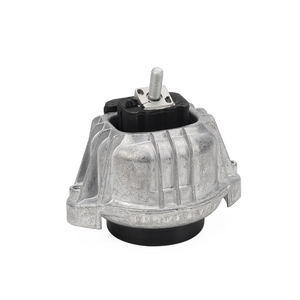
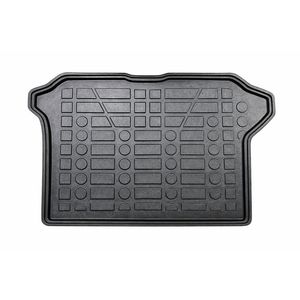
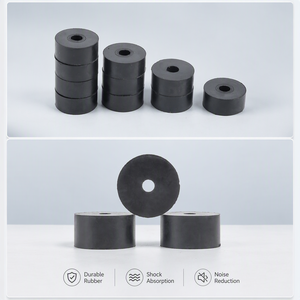
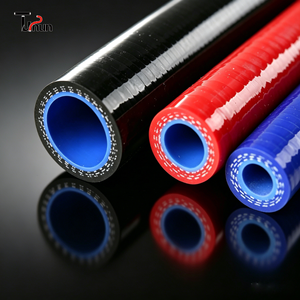
Explore our certified range of engine mounts, center bearing supports, damping pads, and high-tensile silicone and EPDM assemblies designed to surpass standard OEM wear cycles.
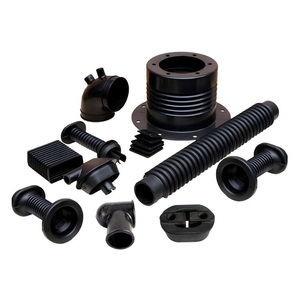
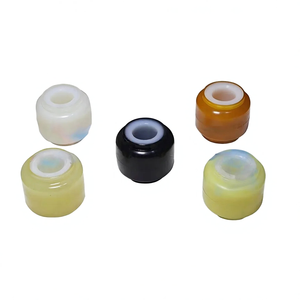
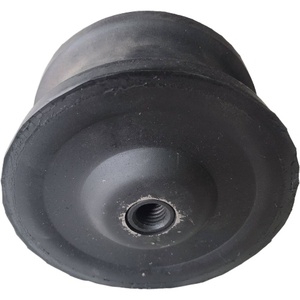
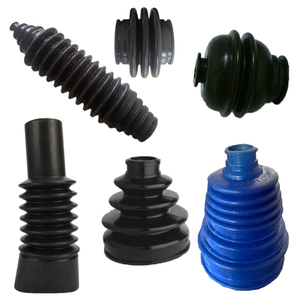
The Critical Role of Center Bearing Cushions in Driveline Longevity
In modern multi-segment driveshaft (propeller shaft) architectures, the center bearing cushion represents the mechanical pivot point between raw torsional delivery and acoustic cabin isolation. Long-wheelbase utility vehicles, Class 6-8 transport trucks, and intercity passenger buses rely on divided propeller shafts to circumvent the catastrophic resonant bending frequencies associated with long, unsupported steel shafts. Operating at this junction, the intermediate driveshaft support bearing assembly must counteract substantial radial deflections, harmonic secondary-couple vibrations, and abrupt longitudinal acceleration loads.
As an authoritative global supplier and specialized manufacturing exporter founded in 1980, Amit Rubber Products designs and produces center bearing cushion matrices that bridge elastomer compliance with structural durability. A sub-standard center bearing cushion leads inevitably to accelerated universal joint (U-joint) trunnion failure, premature carrier bearing brinelling, and violent cabin boom frequencies around 30 Hz to 90 Hz. By engineering advanced NR/EPDM compound blends and high-strength metal bracket inserts, we ensure that torsional energy is absorbed at the chassis mounting points without transmitting harmonic shear back into the transmission housing.
Elastomer Dynamics and Vulcanization Mechanics
The core capability of an effective center bearing cushion resides in its dynamic spring rate ($K_r$) and loss factor ($\tan \delta$). During vehicle launch under maximum gross vehicle weight (GVW), high-torque driveline wind-up causes intermediate shaft displacement. If the rubber compound is excessively rigid, high-frequency gearbox whining and gear mesh excitation transfer unobstructed into the passenger compartment or cab chassis. Conversely, an under-damped elastomer enables shaft run-out, resulting in dynamic imbalance and destructive cyclic shock loads on the universal slip-spline.
Our manufacturing protocols leverage high-pressure injection molding and precision-controlled continuous vulcanization. Natural rubber (NR) and Polybutadiene blends are utilized to achieve optimal tensile resilience, low hysteresis loss, and superior flex fatigue life under repeated deflection cycles. For extreme temperature, ozone, and oil mist exposure, custom-compounded Ethylene Propylene Diene Monomer (EPDM) and specialized synthetic elastomers are implemented to prevent premature surface micro-cracking and compound plasticizer migration.
Future Procurement Trends for Driveline Center Bearing Cushions
Key technological, regulatory, and supply chain shifts redefining how procurement executives evaluate Tier-1 and Tier-2 rubber component exporters.
Total Cost of Ownership (TCO) Prioritization
Fleet operators and wholesale distributors are transitioning away from unit-cost procurement to lifecycle-based evaluation. Sourcing center bearing assemblies with verified rubber-to-metal bonding strength reduces roadside driveline failures and secondary differential housing replacement costs.
OEM Direct Matching & Cross-Reference Verification
Importers now require complete reverse-engineering fidelity against industry standard part numbers (e.g., 88507, 88508, 88509, 88511, 88512, 2518/6013). Digital verification of bracket hole center pitch, inner diameter (ID), and bearing bore tolerances minimizes aftermarket RMA dispute rates.
Supply Chain Nearshoring & Direct India Hub Sourcing
Global buyers are actively de-risking single-region dependencies by establishing long-term ties with established Indian engineering manufacturers. With mature automotive clusters in New Delhi's Kashmere Gate, buyers secure high-grade metallurgical and elastomeric parts with tariff advantages.
Engineering and Technological Evolution in Center Bearing Design
Dual-Durometer & Progressive Damping Profiles
Next-generation center bearing cushions employ variable-cross-section elastomeric geometry. Soft internal webs isolate fine cruising vibrations, while integrated radial stops provide exponential stiffness during heavy low-gear acceleration, arresting shaft jump without harsh metallic knock.
Advanced Chemlok® Polymeric Adhesion Systems
Elastomer-to-metal bonding failure is the leading cause of field returns. State-of-the-art multi-stage phosphating, primer dipping, and thermal curing protocols produce vulcanized bonds stronger than the cohesive tensile strength of the rubber matrix itself, resisting peel stress up to 12 MPa.
EV and Hybrid Driveline NVH Calibration
With internal combustion engine masking noise absent in commercial electric vehicles (EVs) and hybrid chassis, driveline center bearing noise stands out distinctly. Modern cushions are undergoing micro-harmonic re-tuning to eliminate high-rpm electromagnetic motor resonance.
Why Tier-1 Distributors Rely on Amit Rubber Products
Combining over four decades of precision compounding, in-house tooling, and direct OEM-grade compatibility from New Delhi's historic automotive trade center.
Direct Factory Manufacturer
Operating since 1980 under the guidance of Mr. Amit Chitkara, we control compounding, compression tooling, and metal stampings without intermediaries.
Exhaustive Platform Coverage
Proven tooling for Tata (407, 709, 1613, 2515, Signa, Prima), Ashok Leyland (U-Truck), Marcopolo buses, Mahindra Bolero, and agricultural tractors.
Rigorous Shore Durometer QC
Every production lot is measured for Shore A hardness tolerance (±3 Shore A), tensile elongation, rebound resilience, and thermal stability before packing.
Global Export Logistics
Fast inventory dispatch, moisture-resistant maritime export packaging, and verified consignment tracking across Europe, Middle East, Africa, and the Americas.
Frequently Asked Questions on Center Bearing Cushion Procurement
What are the key technical indicators of a failing center bearing cushion? +
How do you guarantee rubber-to-metal bonding integrity during manufacturing? +
Can you cross-reference and manufacture custom center bearings from physical samples or drawings? +
What elastomer compound is optimal: Natural Rubber (NR), EPDM, or Polyurethane (PU)? +
What are your minimum order quantities (MOQ) and lead times for export shipments? +
Partner with a Proven Center Bearing Cushion Manufacturer
Secure OEM-calibrated driveline rubber products, custom formulations, and dependable wholesale export delivery directly from Amit Rubber Products.
Contact Us