Specialized Automotive Rubber Components for Iraqi Fleets & Importers
Precision-moulded, thermally stabilized elastomeric parts certified to IATF 16949 standards, engineered specifically to resist ozone cracking, high ambient temperatures, and abrasive desert silica dust.
Iraq Automotive Spare Parts Environment: Elastomer Vulnerabilities Under Desert Operations
Operating commercial road freight, public passenger transport, agricultural tractors, and private passenger automobiles across Iraq presents one of the harshest physical endurance trials anywhere in the global automotive sector. From the intense southern arterial corridors connecting Basra and Umm Qasr port facilities to the industrial arteries through Nasiriyah, Najaf, Karbala, the sprawling logistics network of Greater Baghdad, and up through Kirkuk, Erbil, and Sulaymaniyah in the Kurdistan Region, vehicles encounter ambient summertime temperatures consistently eclipsing 50°C (122°F). At ground level, asphalt radiant temperatures regularly cross 75°C (167°F).
In conventional automotive engineering, baseline vulcanized natural rubber (NR) and sub-standard recycled styrene-butadiene rubber (SBR) parts degrade rapidly under these conditions. Standard rubber compounds experience accelerated thermal depolymerization, plasticizer dry-out, ultraviolet oxidation, and micro-cracking when exposed to ozone. When high levels of fine desert quartz silica dust—common in Baghdad dust storms and the open terrains of Anbar and Muthanna—enter the chassis friction zones, unsealed rubber sleeves, control arm silent blocks, and driveshaft centre support bearings suffer rapid abrasive erosion.
As an OEM-capable automotive rubber parts manufacturer with heritage dating back to 1980, our production facility delivers IATF 16949-grade components formulated with specialized synthetic elastomer matrices. By customizing polymers—including high-density EPDM (Ethylene Propylene Diene Monomer), fuel-and-oil-resistant NBR (Nitrile Butadiene Rubber), synthetic Chloroprene (Neoprene / CR), premium grade Fluoroelastomers (FKM / Viton), heavy-duty Polyurethane (PU), and high-tensile Silicone (VMQ)—we manufacture automotive rubber components engineered to prevent premature blowout, split sleeves, fluid weeping, and catastrophic driveline misalignment across Iraq’s transportation infrastructure.
Key Automotive Rubber Application Scenarios Across Iraqi Sectors
Explore where our heavy-duty and light-vehicle vulcanized parts resolve chronic mechanical failure modes in Iraq's core commercial, municipal, and private automotive fleets.
Long-Haul Highway Freight
Tractor-trailers traversing Route 1 from Basra to Baghdad face continuous vibrational shocks and relentless heat. Our drive shaft centre bearing assemblies (88509, 88512, 2518/6013), York trailer suspension bushes, and fifth wheel 55mm dampener pads minimize driveline whip and protect chassis structural integrity under maximum gross vehicle weight.
Oilfield Support & Heavy Utility
Rig movers, fuel tankers, and cranes operating in Rumaila, West Qurna, and Zubair encounter hydraulic fluids, sour gas traces, crude overspray, and rough unpaved trails. We supply heavy-duty engine mounts, FKM high-temperature oil seals, and NBR mud boots that withstand petroleum degradation while absorbing severe chassis torsion.
Passenger Cars & Urban Taxis
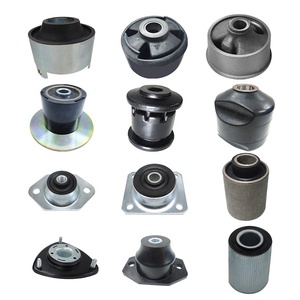
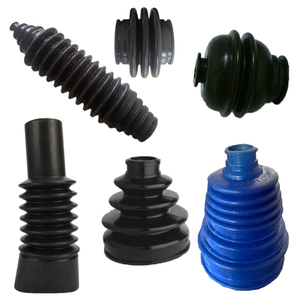
High-volume city fleets in Baghdad and Erbil—dominated by Toyota Hilux, Land Cruiser, Hyundai Elantra, Kia Cerato, and imported American SUVs like the Jeep Cherokee (KL)—suffer suspension degradation from uneven roads. Our control arm rubber sleeves, silent block kits, and steering rack bellows restore handling stability and tire alignment.
Agriculture & Reconstruction
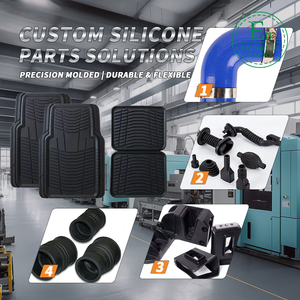
Mesopotamian agricultural plains and northern construction corridors rely on tractors, harvesters, and earthmovers. Our reinforced EPDM radiator bypass hoses, 4-ply red silicone hump hoses, and flexible cabin isolators maintain engine cooling and operator comfort under continuous duty in dust-heavy environments.
Polymer Comparison: Material Formulations Engineered for Iraqi Operations
Review the mechanical properties, chemical affinities, and thermal endurance ratings of our automotive rubber compounding portfolio.
| Polymer Base | Hardness (Shore A) | Working Temp (°C) | Resistance Strengths | Primary Iraqi Automotive Applications | Standard Certifications |
|---|---|---|---|---|---|
| EPDM (Peroxide Cured) | 50 – 85 ±5 | -45°C to +135°C | Coolant additives, Ozone, Extreme UV, Steam | Radiator inlet/outlet hoses, cabin weatherstrips, heater bypass tubes | SAE J20 R4 / IATF 16949 |
| NBR (Acrylonitrile Butadiene) | 55 – 80 ±5 | -35°C to +120°C | Mineral oils, Diesel fuel, Grease, Hydraulic fluids | Engine valve cover gaskets, oil seals, fuel return hoses, turbo drains | ASTM D2000 / DIN 75201 |
| PU (Cast Polyurethane) | 70 – 95 ±5 | -30°C to +95°C | Abrasion, Heavy dynamic load, Desert sand cutting | Heavy truck balance rod bushes, York trailer bushes, silent block collars | ISO 4649 Abrasion Cert |
| VMQ (High-Temp Silicone) | 40 – 75 ±5 | -50°C to +220°C | Extreme turbo boost heat, Cyclic compression fatigue | Turbocharger hump hoses, intercooler couplers, spark plug boots | SAE J200 / Class GE |
| NR / Metal Bonded | 45 – 70 ±5 | -40°C to +90°C | High elastic recovery, Dynamic vibrational damping | Front engine mountings, driveshaft center cushions, gearbox supports | ASTM D429 Bond Adhesion |
Emerging Trends Reshaping Automotive Rubber Sourcing in Iraq
The Iraqi automotive spare parts market is undergoing a major structural evolution. Commercial importers in Baghdad’s historic Sinak spare parts bazaar, as well as trading hubs across Erbil’s 100 Meter Industrial Area and Basra’s Ashar wholesale district, report three decisive shifts influencing procurement decisions:
1. Shift Away From Low-Grade Domestic Recycled Polymers: Historical dependence on low-grade recycled SBR parts has declined significantly. Iraqi workshop mechanics and commercial fleet managers are actively rejecting components that harden and disintegrate after a single summer. Procurement specialists increasingly verify tensile strength ratings, compound composition, and origin quality certificates before finalizing wholesale import contracts.
2. Surge in North American and East Asian Vehicle Populations: While European commercial trucks (Mercedes-Benz Actros, Scania, MAN, Volvo) and Indian/Japanese workhorses (Tata, Ashok Leyland, Isuzu) continue to anchor long-haul logistics, passenger car imports have diversified. There is a surging demand for specialized suspension silent blocks, steering gear boots, and anti-roll bar bushings engineered for American imports (such as Jeep Cherokee, Dodge Charger, and Ford F-Series) alongside omnipresent Japanese and Korean models (Toyota, Kia, Hyundai).
3. Demand for Direct Factory Customization and Private Branding: Leading Iraqi importers increasingly bypass intermediary brokers, seeking direct manufacturer partnerships capable of providing tailored compound formulations, laser-etched OEM reference codes, and customized retail packaging in Arabic and English. Direct-from-factory collaboration allows wholesalers to maintain robust profit margins while delivering parts that perform reliably in the Iraqi climate.
Factory Advantages & Engineering Capabilities
With an industrial heritage founded in 1980 in Kashmere Gate, New Delhi, we provide end-to-end manufacturing, custom tool design, and global logistics execution for global auto parts distributors.
46+ Years Manufacturing Heritage
Established in 1980, our factory provides decades of hands-on expertise in precision rubber compounding, compression moulding, silicone injection, and rubber-to-metal bonding.
OE Specification Matching
Every bushing, hose bend, and engine mount is engineered against strict OEM benchmarks (including Tata, Leyland, Jeep, Scania, and Toyota profiles) to guarantee straightforward, drop-in workshop installation.
Zero-Defect Quality Controls
Each production batch is subjected to rigorous testing, including Shore durometer checks, tensile elongation verification, rheometer cure profiling, and ASTM D429 metal bond peel testing before container dispatch.
Custom Tooling & Rapid Moulding
From CAD blueprints or physical worn samples shipped from Baghdad or Erbil, our in-house CNC toolroom manufactures custom prototype moulds in 12–15 business days.
Flexible Iraqi Freight Logistics
Experienced in Middle East shipping routines, we organize ocean freight to Umm Qasr Port or air freight routes to Baghdad International (BGW) and Erbil International (EBL) airports, complete with all necessary export paperwork.
Robust Inventory & Packaging
High inventory availability on fast-moving drive center bearings, silicone hump hoses, and engine mounts ensures rapid dispatch. Parts are packed with anti-humidity shrink wrap to maintain factory condition during transit.
Frequently Asked Questions by Automotive Parts Buyers in Iraq
Detailed technical, logistical, and commercial answers for auto parts wholesalers, transport cooperatives, and import-export agents in Iraq.
Can your factory manufacture parts directly matched to our physical samples or OE part numbers?
+
How do your rubber formulations withstand Iraqi summer temperatures exceeding 50°C?
+
What are the typical shipping routes, lead times, and customs documentation for deliveries to Iraq?
+
What are your Minimum Order Quantities (MOQ) and production lead times for Iraqi importers?
+
Do you offer private labeling, custom branding, and custom packaging for Iraqi retail distributors?
+
How does your quality control lab verify rubber-to-metal bonding integrity?
+
Establish a Direct Factory Partnership for the Iraqi Automotive Market
Whether you require OEM replacement runs, container-load wholesale distribution for Iraqi auto parts markets, or bespoke rubber formulations tailored for heavy fleets, our engineering team is ready to assist. Send your part numbers, technical drawings, or physical samples today for an accurate technical assessment and competitive factory-direct pricing.