Featured Powertrain & Suspension Mounting Assemblies
Explore our primary rubber-to-metal bonded dampers, heavy-vehicle cabin isolators, and high-temp transfer assemblies widely supplied across Port of Manila, Caloocan, and Southern Luzon industrial zones.
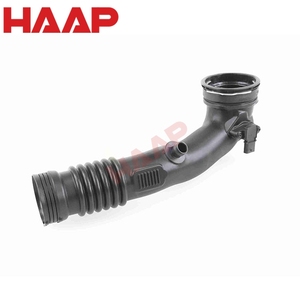
Car Engine Air Intake Hose for BMW 6 Series F06 F12 F13 X5 F15 F85 X6 OE 13718626487
High-tensile heat-resistant synthetic elastomer engineered to maintain laminar airflow under underhood temperatures up to 135°C.
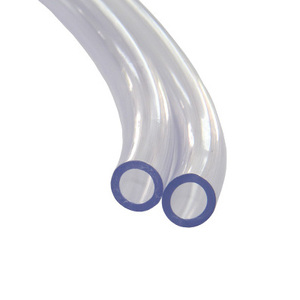
Coolant Hose Non Pressurized NW3.2 Transparent Flexible Tube Fluid Transfer
Reinforced crystal polymer tubing for overflow calibration, fuel return, and secondary cooling cycles with superior chemical anti-blooming.
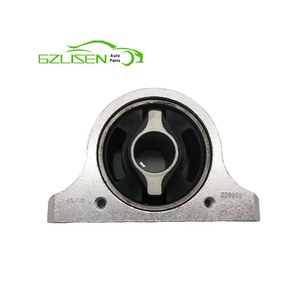
Transmission Rubber Mounting Bracket Full Pad Support OE 239753
High-durometer Shore 65A vulcanized core tailored for low-amplitude, high-frequency torque damping in high-output gearboxes.
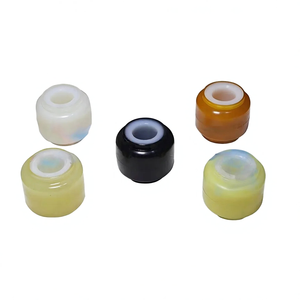
Polyurethane Cab Front Suspension Rubber Bushing Sinotruk Howo
Abrasion-resistant cast polyurethane compound preventing metal-on-metal frame contact over degraded road beds and quarry access.
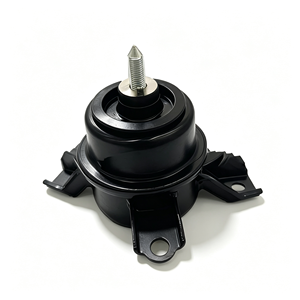
21810-1J000 Engine & Transmission Mount Rubber Support
Direct OE-spec replacement with internal hydraulic resonance chamber isolating low-RPM idling shake common in commercial urban fleets.
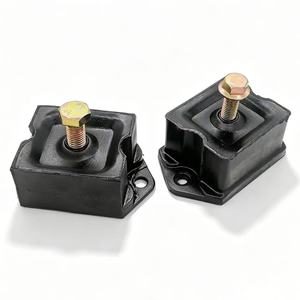
Engine Rubber Mount WG1680590095 Front Support Sinotruk Howo Heavy Duty
Heavy-tonnage prime mover cushion built with multi-layered high-tear natural rubber bonded to high-yield steel mounting flanges.
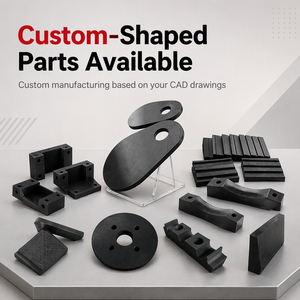
OEM Molded Rubber Shock Absorber Custom Vibration Damping Feet
Custom-engineered cylindrical and conical isolators built for stationary diesel generators, auxiliary water pumps, and compressor skids.
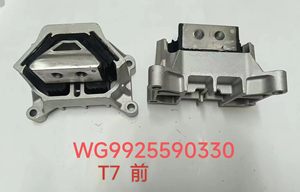
Aluminum Suspension Truck Engine Mount WG9925590330 Howo T7
Weight-optimized die-cast alloy housing integrated with anti-shear elastomeric core, rated for 400+ HP severe-torque drivetrains.
Technical Whitepaper: Powertrain Isolation Under Metro Manila Operating Conditions
Operating commercial fleets and industrial equipment within the National Capital Region (NCR) of the Philippines introduces a destructive trifecta for powertrain mounts: chronic thermal load, severe mechanical fatigue from stop-and-go driving, and chemical degradation from monsoon flooding and coastal salinity. Standard aftermarket rubber parts designed for temperate climates routinely experience premature delamination, accelerated embrittlement, and dynamic settling within 8 to 14 months of deployment along major traffic arteries like EDSA, C-5, and the Port Area.
1. Thermal Degradation & The EDSA Congestion Heat Island
Metro Manila’s ambient temperatures hover between 31°C and 37°C during dry season peaks, yet the localized underhood temperature of a loaded commercial truck or utility van stuck in 2-hour crawling traffic frequently exceeds 110°C. Conventional natural rubber vulcanizates without antioxidant and antiozonant reinforcement suffer from irreversible thermo-oxidative crosslink cleavage. As polysulfidic crosslinks break under prolonged thermal soaking, the rubber undergoes hardening, permanent set deformation, and micro-cracking across high-strain shear boundaries. This compromises the mount’s natural frequency isolation, transmitting low-frequency vibration directly into the chassis rail.
Compound Chemistry Comparison: Standard Commercial vs. Manila Heavy-Duty Formulation
Standard grade mounts rely on conventional sulfur vulcanization systems that degrade swiftly above 70°C. Amit Rubber Products implements Efficient Vulcanization (EV) and Semi-EV curing systems, elevating mono-sulfidic crosslinks. This configuration drastically diminishes compression set while preserving tensile elongation above 450% across ambient and high-operating engine temperatures.
2. Port Drayage & Severe Shock Loading along Circumferential Corridors
Heavy haulage units operating out of Manila South Harbor and the Manila International Container Terminal (MICT) face catastrophic torsional deflection during launch cycles on uneven pavement. A 40-foot container chassis carrying 30+ metric tons puts an instantaneous angular moment on the engine and transmission brackets. If the rubber-to-metal bonding interface lacks adequate phosphating and high-cohesion chemlok adhesives, the elastomer undergoes shear delamination at the metal plate interface. Our manufacturing protocol applies multi-stage shot-blasting, zinc-phosphate conversion coating, and robotic primer application to ensure tensile adhesive failure occurs within the elastomer body itself—never at the metal interface.
Elastomer Selection & Performance Metrics for Philippine Fleets
Selecting the appropriate polymer blend requires balancing dynamic stiffness ($K_d$), static stiffness ($K_s$), loss factor ($\tan \delta$), and fluid contamination resistance. Diesel spills, motor oil mist, and road salt brine near Manila Bay degrade inferior elastomers rapidly. Below is our engineering benchmark for powertrain and suspension mounts serving the Philippine archipelago:
| Performance Parameter | Standard Commercial Grade | Amit Rubber HD Heavy Duty | Test Standard |
|---|---|---|---|
| Base Polymer Matrix | Standard Reclaim Blend (NR/SBR) | Virgin RSS1 Natural Rubber / Polyurethane | ASTM D297 |
| Shore A Hardness | 50 ± 5 | 60 ± 3 to 70 ± 3 | ASTM D2240 |
| Tensile Strength (MPa) | ≥ 14.0 MPa | ≥ 22.5 MPa | ASTM D412 |
| Elongation at Break (%) | ≥ 350% | ≥ 520% | ASTM D412 |
| Compression Set (70h @ 100°C) | ≤ 45% | ≤ 18% | ASTM D395 Method B |
| Rubber-to-Metal Bond Strength | ≥ 6.0 MPa (Adhesive failure) | ≥ 12.8 MPa (100% Rubber Tear) | ASTM D429 Method B |
| Ozone Resistance (50 pphm @ 40°C) | Cracks at 48 hours | No cracks at 168 hours | ASTM D1149 |
Localized Application Scenarios Across Greater Manila
From inter-island roll-on/roll-off (RoRo) drayage to Metro Manila logistics corridors, our engine rubber mounts provide calibrated dynamic isolation across demanding duty cycles.
Sinotruk HOWO & Shacman Dumpers
Extensively deployed in the "Build Better More" infrastructure initiatives—including the North-South Commuter Railway (NSCR) and New Manila International Airport reclamation in Bulacan. High-tonnage haulers demand front engine mounts (WG1680590095) that resist constant shock-rebound cycles during unpaved gravel transport.
Urban UV Express & Light Logistics Vans
Last-mile distribution vans traversing Caloocan, Quezon City, Pasig, and Makati operate under nonstop thermal idling. Our Hyundai i20 (21810-1J000) and commercial utility mounts prevent hydraulic resonance leakage, reducing cabin noise, vibration, and harshness (NVH) to preserve passenger comfort.
Stationary Gensets & Industrial Skids
Industrial estates in Cavite, Laguna, and Valenzuela rely heavily on backup diesel generation during grid brownouts. Our molded rubber shock-absorbing feet isolate harmonic frequencies from 1500 to 1800 RPM generators, preventing floor slab resonance and foundation cracking.
Strategic Sourcing Trends in the Greater Manila Aftermarket
Historically, auto spare parts importers throughout Binondo, Banawe, and Caloocan relied on multi-tiered brokers for replacement rubber goods. However, persistent inventory shortages, erratic batch hardness, and soaring logistics fees have accelerated three transformative sourcing shifts:
Bypassing Intermediary Markups
Fleet operators and warehouse distributors are moving toward direct-from-manufacturer contracts. Sourcing straight from specialized vulcanization facilities eliminates middleman markups by 25% to 40% while ensuring direct trace-ability of raw polymer batches.
Fleet Standardization Programs
Instead of managing fragmented stock across multiple suppliers, major Luzon transport companies are consolidating around standardized part families: center bearing cushions, front engine mounts, and balance rod bushes with guaranteed cross-fleet dimensional parity.
Custom Compound Specifying
Buyers are increasingly requesting customized Shore A hardness ratings and hybrid polyurethane (PU) formulations for heavy haulage suspension points to survive the severe monsoon season flooding across Central Luzon routes.
With direct maritime shipping lanes connecting major Asian manufacturing ports to the Manila South Harbor and Batangas Port, lead times for custom containerized orders have compressed significantly, allowing Filipino procurement heads to maintain lean just-in-time warehouse reserves.
Amit Rubber Products: Four Decades of Engineering Excellence
Established in 1980, Amit Rubber Products has evolved from an automotive rubber workshop into an international manufacturer and exporter of commercial driveline cushions, engine mountings, high-temperature turbo/radiator hoses, and suspension bushes. Guided by decades of practical engineering leadership, our New Delhi production infrastructure bridges traditional material knowledge with modern vulcanization technology.
In-House Tooling & Mold Design
We engineer multi-cavity progressive compression and injection molds directly from CAD drawings or reverse-engineered client samples, cutting prototype turnaround to under 20 business days.
Automated Surface Preparation
Metal stamping and alloy housings undergo automatic shot-blasting, multi-stage chemical degreasing, and robotic application of Chemlok adhesives to ensure bond strength outlasts the rubber matrix.
Comprehensive Laboratory Testing
Every vulcanized production run is verified via rheometer cure curves, tensile break machines, dynamic fatigue cyclers, and ozone-aging environmental chambers matching international OEM criteria.
With direct exports reaching more than 20 countries, we provide our Manila business partners with full logistics coordination, containerized sea freight packaging, customs HS-code harmonization, and documented material test reports (MTRs) for trouble-free port customs clearance.
Frequently Asked Questions for Philippine Buyers
Direct technical answers addressing lead times, shipping to Manila, custom fabrication, and part identification for workshops and distributors.
How do you ensure engine rubber mounts withstand high tropical humidity and saline air around Manila Bay?
Can you manufacture custom engine mounts from a physical sample or worn-out OE part?
What is the typical shipping transit time and minimum order quantity (MOQ) for Port of Manila?
How do your mounts resolve the low-frequency vibration common in diesel utility vehicles?
What documentation do you provide for Philippine Bureau of Customs (BOC) clearance?
Partner with a Proven Industrial Rubber Manufacturer
Whether you manage a municipal transport fleet, distribute commercial truck spares across Banawe and Caloocan, or require specialized OEM engine mountings, our engineering team is ready to review your specifications.
Send an Inquiry